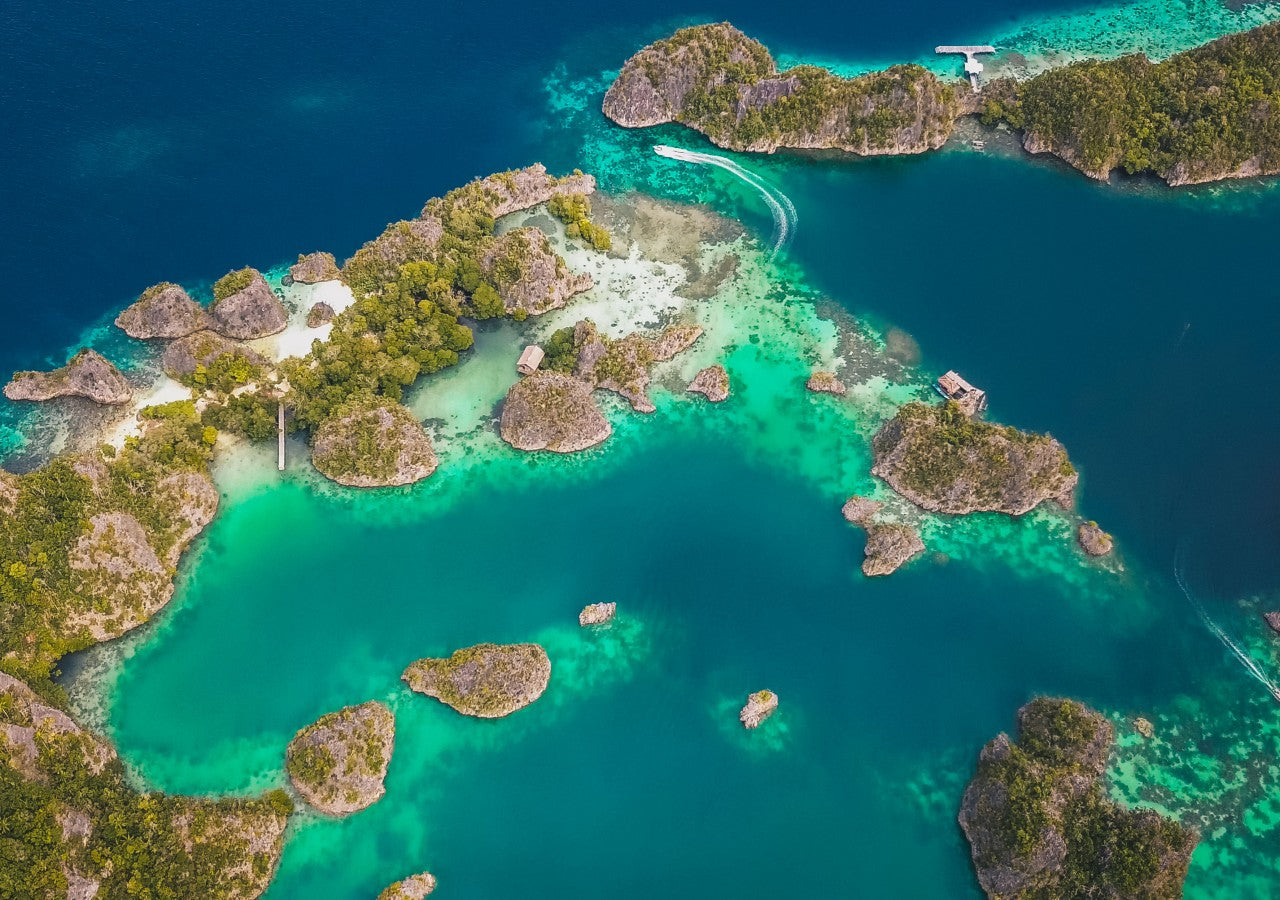
WOODCHUCK USA's latest planting site is in Biak, Indonesia. Through our partnerships, we are working with the local villagers on Biak Island to restore, replant, and protect this unique and vital forest system.
Indonesia is one of the most biodiverse regions on earth and home to 12% of the world’s mammals, 16% of the world’s reptiles and amphibians, 17% of the world’s birds and 25% of the global fish populations. Endangered species include the Sumatran Tiger, Orangutan’s, the Javan Rhinoceros and Sumatran Elephants.
The people of Indonesia rely heavily on the biodiversity of their environment for subsistence needs. Traditional fishermen rely on the wetland ecosystems, including mangroves, coral reefs and seagrass for their livelihood. In the last 3 decades, Indonesia has lost over 40% of its mangrove forests, affecting not only the environment and the species that rely on them but also the communities that depend on this ecosystem for survival.